.svg)
Shopify is evolving fast, and merchants are doing their best to keep pace. To stay competitive, staying informed isn’t just helpful anymore; it’s essential.
In this year’s Sync session, Visualsoft’s Craig Busfield, VP of Engineering, and Lewis McLeod, Shopify Technical Lead, explored how artificial intelligence is transforming the Shopify ecosystem. The focus wasn’t theory. It was about how merchants can start using AI now to build smarter, more personal, and more efficient customer experiences.
From AI-powered recommendations and predictive insights to automated content and smarter workflows, Craig and Lewis broke down practical ways to start testing these tools today. And they gave us an early look at Shopify’s new Horizon theme architecture, something that could redefine how merchants scale and customise their storefronts.
Whether you’re a merchant, developer, or agency partner, this was the session that connected the dots between AI, design, and the future of Shopify.
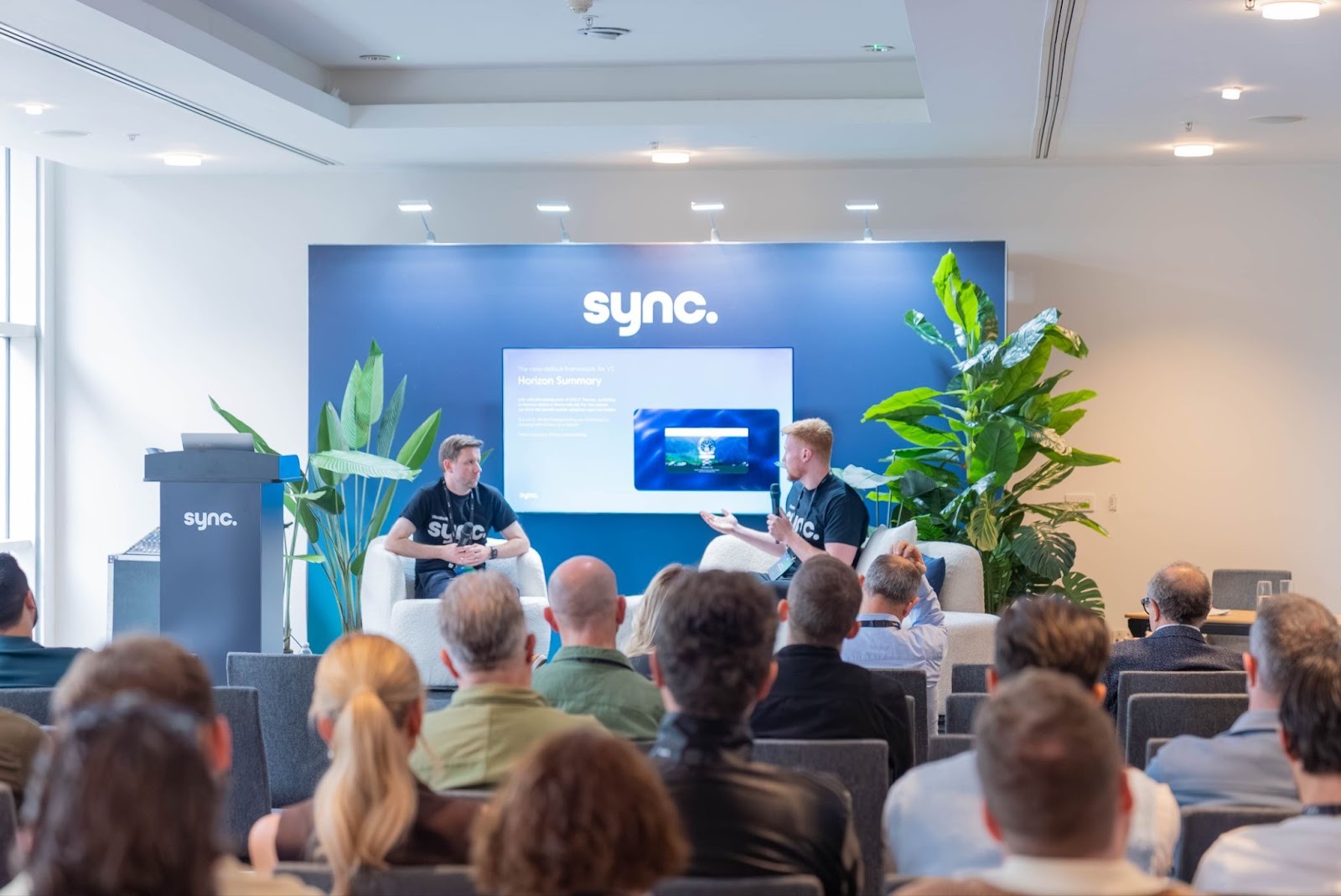
Building smarter with Shopify’s horizon theme
Following the success of Shopify’s Dawn theme, Horizon marks the next major step in Shopify’s theme architecture. And according to Lewis, it’s a big leap forward - both in flexibility and in how it integrates AI.
Horizon was “reimagined to be ultra-flexible for merchants,” Lewis explained, allowing brands to launch new sections or landing pages in minutes, often without heavy development input.
One of Horizon’s standout features is its built-in generative AI tool, which helps merchants create custom sections without writing a single line of code.
“It does require a prompt,” Lewis noted, “but Shopify gives examples within Horizon that show how those prompts should be structured, what the AI expects in order to build exactly what you need.”
While the feature is still maturing, the trajectory is clear. “It’s already impressive,” Lewis added. “And I can only imagine it’ll take over even more of the theme in the next generation.”
Another major leap comes from nested blocks, a quiet but powerful innovation for theme customisation. Previously, merchants could tweak predefined sections such as slideshows or banners, but making deep structural changes was difficult. Nested blocks change that. Merchants can now build flexible sections and insert smaller, fully customisable elements within them.
As Lewis put it, “Dawn gave you great fit-for-purpose sections, but Horizon gives you creative freedom. You can really see what each section is capable of when you push it to its limit.”
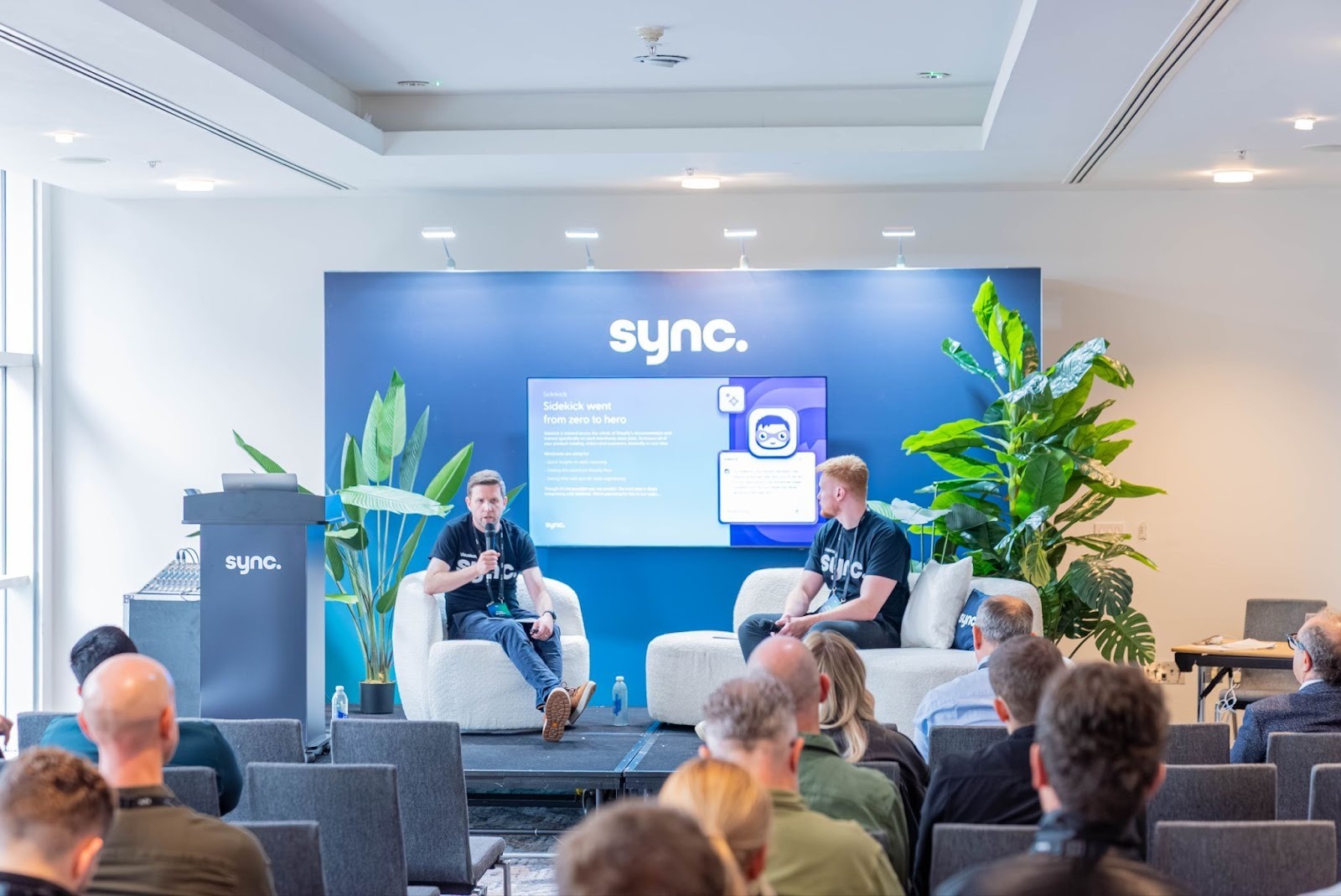
How Shopify’s Sidekick and GPT integration are changing eCommerce
While Horizon changes how merchants build, Shopify’s AI features are transforming how they operate and how customers shop.
One standout is Shopify Sidekick, the platform’s built-in AI assistant. Craig explained, “If you’ve used Shopify recently, you’ve probably seen it. You can ask it questions, and it knows your store inside out.”
From identifying best-sellers to brainstorming seasonal campaigns, Sidekick doesn’t just give answers; it suggests actions. “It’s helping people take complex processes and make them simple,” Craig said.
For smaller teams or solo merchants, it’s a game-changer. Sidekick acts like a digital strategist, surfacing insights, flagging trends, and even guiding marketing decisions, all from within the Shopify admin.
But perhaps the most intriguing development is what’s next: Agentic Shopping.
This new trend, driven by Shopify’s partnership with OpenAI, allows customers to purchase products directly through ChatGPT. Craig believes this could change the way people shop entirely. “People are starting to use GPTs more than they use Google,” he said. “We think this could become the way people buy.”
To prepare for that shift, data quality will be critical. Product information must be clean, structured, and consistent to perform well in AI-driven conversational search. That means everything - from product descriptions to metadata - needs to be optimised not just for human readers, but for intelligent systems too.
It’s a subtle point, but it could separate those who thrive in the next era of eCommerce from those who fall behind.
A glimpse into the future of connected Commerce
Shopify isn’t standing still. Between Horizon’s AI-powered flexibility, Sidekick’s operational intelligence, and GPT-enabled shopping experiences, it’s clear the platform is moving towards something bigger, a future where data, design, and automation work seamlessly together.
And while some of this might sound a little futuristic, Craig and Lewis made it feel very real. Practical, even.
The message? You don’t have to overhaul everything overnight. Start small. Test new features. Learn what works. Because, as Craig put it, “AI is no longer a tool for the future, it’s already part of how we build, sell, and connect.”
Watch every moment from Sync 2025 on demand now.