.svg)
The digital landscape just experienced its most profound shift in a generation. At Google I/O 2026, Google leaders pulled back the curtain on a complete re-engineering of the iconic search engine. Described as the most significant change to the classic search box since it first appeared over 25 years ago, Google is officially transitioning from a directory of links into a fully conversational, transaction-ready AI ecosystem.
With AI Overviews now reaching 2.5 billion monthly users and the dedicated "AI Mode" officially crossing the 1 billion user milestone, the future of how people find information, buy products, and interact with your brand and products is here.
Here is a breakdown of what exactly changed at Google I/O, what it means for your digital presence, and how Visualsoft is keeping your business at the forefront of this new era.
Big reveal: 3 core pillars of ‘new search’
Google is moving away from the "search query" and leaning entirely into 'Agentic Workflows', AI tools powered by their new frontier model Gemini 3.5 Flash that don't just find information, but take action on behalf of the user.
1. The fixed search box is gone
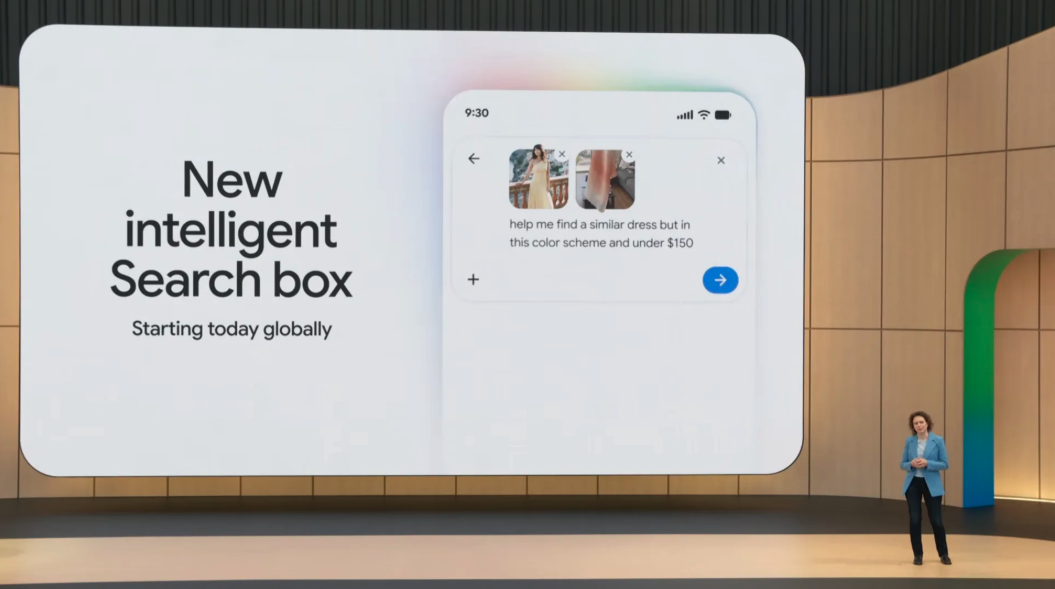
The familiar, static search bar is being replaced globally by an expansive, fluid conversational interface. Customers and users no longer need to figure out the ‘right keywords’ or decide whether to text, type, or image-search. The new search box expands dynamically to accept paragraphs of messy text, voice, images, files, and even open browser tabs simultaneously. It moves beyond autocomplete into a continuous, contextual dialogue where users can slide right into deep, multi-turn conversations.
2. Autonomous ‘information agents’
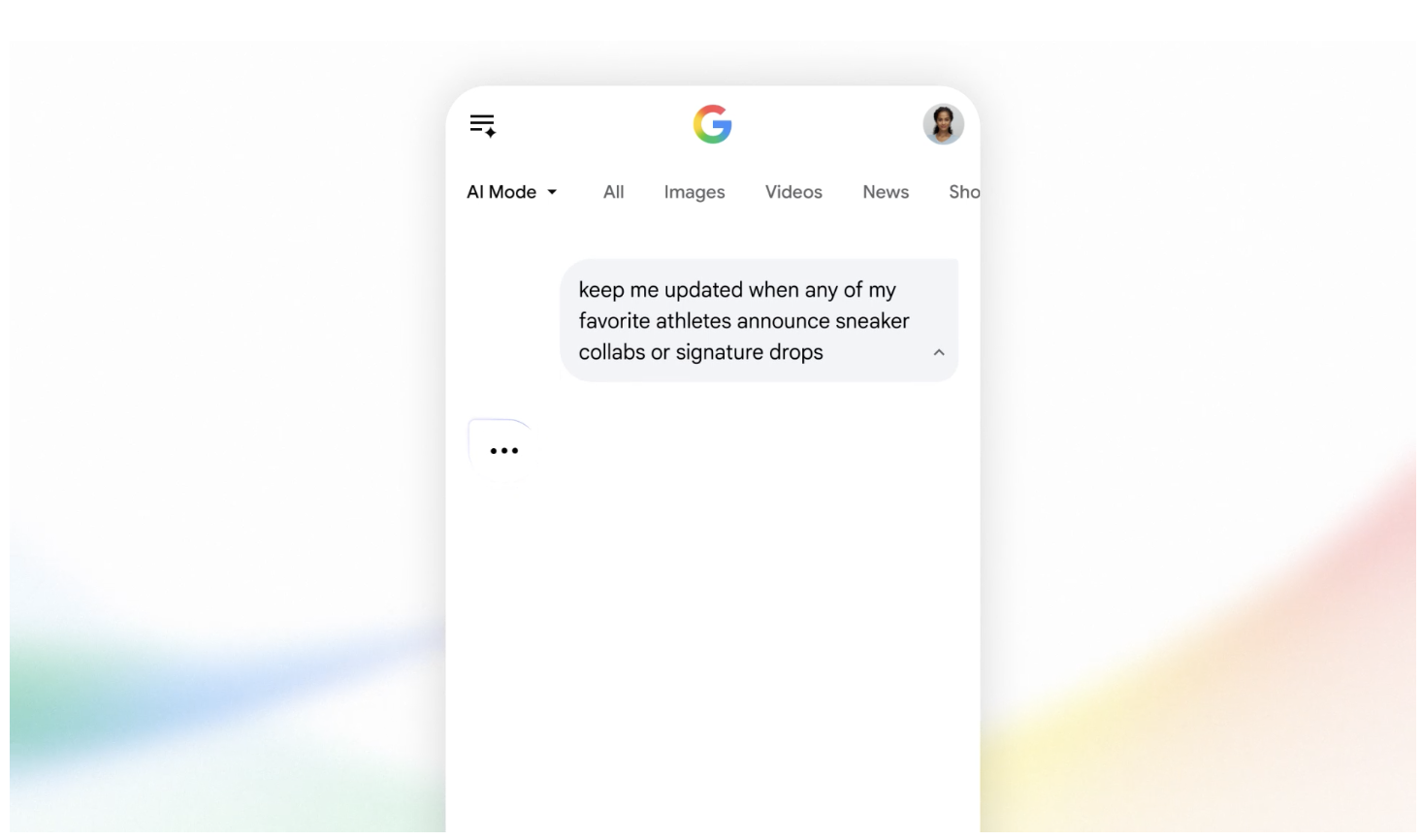
This summer, Google is launching background AI agents. Instead of a user checking a website daily for updates, they can instruct an Information Agent to work on their behalf 24/7. For example, a user can ask an agent to track a specific sneaker drop, monitor apartment listings on a specific street, or be notified of the launch of the latest pop culture merchandise. The agent plans its approach, crawls the web, and pings the user only when their specific parameters are met.
3. Generative UI & instant mini-apps
Powered by Google's Antigravity technology, Google Search can now code and assemble custom dashboards and interactive layouts on the fly. If a user is planning a massive home move, Search won’t just show a list of blog posts; it will generate a bespoke workspace, complete with interactive calculators and tables, that the user can return to and build upon over weeks.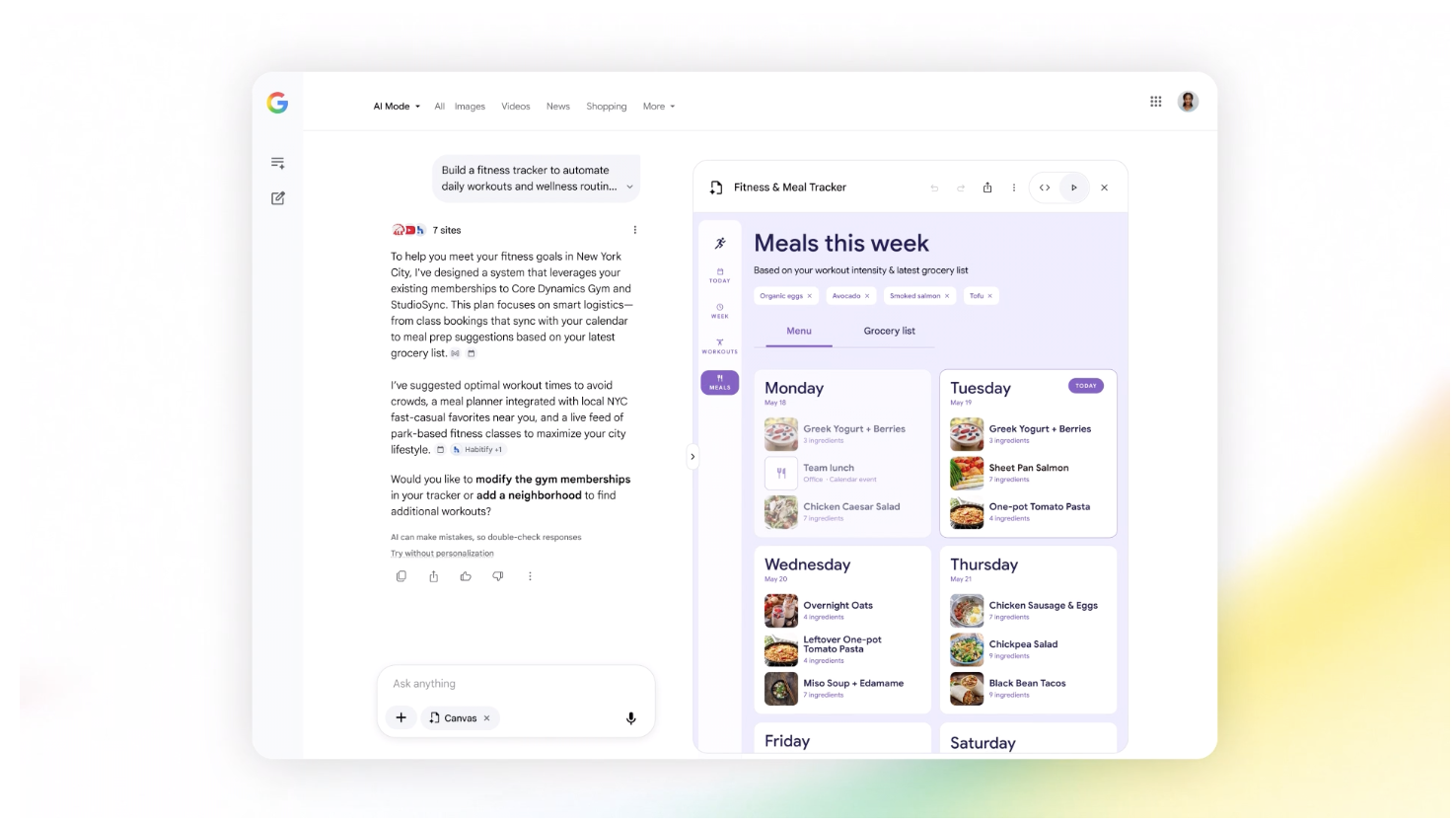
What this means for brands, retailers, and marketers
When Google changes, the rules of the internet change. For businesses who aren't steeped in technical SEO or Generative Engine Optimisation (GEO/AEO) every day, the core takeaway is simple: You must evolve from trying to win clicks, to trying to win AI trust and action.
-
Traffic is shifting, but Intent is Sky-High: Because Google can answer basic questions (’ how-tos’ or simple queries) natively within its interface, traditional informational blog traffic may decline. However, users who click through to your site will have much higher intent; they are further along in the purchasing funnel and seeking deep, authoritative, or human-curated value. We’ve already seen this trend grow over the past year as organic traffic levels continue to reduce to “no-click” searches.
- The rise of ecosystem-ecosystem integration: Features like Google’s expanding Universal Cart ecosystem mean transactions will increasingly happen natively across Search, Gemini, and eventually Gmail and YouTube. Your website is no longer just a standalone destination; it is a data source feeding a wider network of AI agents. It will be just as likely for your customers to buy your product while watching a YouTube video as it is for them to visit your website and purchase in the very near future.
- Structured data is the ultimate currency: If AI agents are going to monitor your products, recommend your brand, or pull your inventory into a user's custom dashboard, they need to read your data perfectly. Error-free schema markup, high-quality product feeds, and clean data infrastructure are no longer ‘technical extras’; they are the pillars of visibility in the future of search.
For retailers, this shift also connects closely to Google’s Universal Cart, which we have explored in more detail here. It looks at how Google is bringing discovery, product comparison and checkout closer together across Search, Gemini, YouTube and Gmail.
For over 12 months we’ve been evolving our services, working with our partners and preparing for this new era of search
1. In October 2025, we relaunched our ‘SEO’ service. We pivoted from a focus on traditional search practices to Generative and Answer Engine Optimisation. Many of our clients have been working with our experts for months, preparing for the shift we anticipated, and which is now here.
-
We have shifted our content creation strategies away from generic keywords and toward ‘topical authority’, first-hand expertise, and real-world utility. We build content that answers complex, multi-layered queries that AI models rely on for citations.
- We’ve partnered with SemRush Enterprise to bring deep analytical data on AI activity, citations and visibility to our clients.
- We created our proprietary Topical Authority Score (TAS) to help our clients understand their effectiveness in this new world of search.
2. We’ve worked with Shopify to create an agentic-readiness app to help your website communicate more clearly with AI agents.
3. As Google pushes toward frictionless commerce through universal cart integrations, our development and platform teams have been creating unified retail environments for over a year, ensuring our retailers are primed to handle orders seamlessly, whether they originate directly on-site, in-store or in an AI chat box.
4. Success in 2026 doesn't just look like standard organic clicks. We have evolved our reporting suite to include profitability analytics, attribution modelling, marketing mix modelling, and additional channel-level specialist tools.
A guide to transitioning to AEO/GEO and agent optimisation
For SEO experts, the goal is no longer just optimising for a specific list of keywords to rank on page one. Structuring your digital presence so Google's AI agents can confidently extract, trust, and recommend your products is the new goal.
1. Feeding the information agents with flawless schema
Because autonomous agents track price drops, compatibility, and real-time inventory in the background, your technical framework must be flawless.
Tactic: Implement hyper-detailed structured data (Schema markup) that goes beyond basic price and availability. SEO managers must prioritise exact material data, sizing charts, localised stock levels, and complex compatibility attributes (for example, specifying exactly which components or accessories fit together), in addition to agent schema, to assist with adding to basic and internal website search.
Our agentic-readiness Shopify app can help you instantly add more of these schemas to your website.
2. Optimising for ‘information gain’ over keyword volume
Basic ‘how-to’ questions and simple definitions are now answered natively within Google's Generative UI. Traditional informational blogs that mirror basic web copy will see traffic drop.
Tactic: Pivot your content strategy to focus on Information Gain, content that offers unique data, proprietary research, first-hand expert opinions, and deep human curation. AI models prioritise citing unique sources that offer perspectives not already present in their training data.
3. Securing citations in multi-turn chats
As users engage in long, conversational threads with Gemini, the initial query context changes over multiple turns.
Tactic: Optimise content for conversational natural language and long-tail query variations. Create comprehensive FAQ clusters and structured comparison guides that address the deeper, follow-up questions users ask after their initial search.
Wider digital marketing strategy: A multi-surface approach
This overhaul impacts every facet of digital performance. To win in this unified ecosystem, digital marketing leaders must look past single-channel attribution and optimise for user touchpoints across the entire Google network and beyond.
1. Paid performance (PPC) & the universal cart
With transactions happening directly inside Search, YouTube, and Gmail via the Universal Cart, Paid Performance managers must consider transitioning from driving ad clicks to feeding highly optimised datasets into Performance Max and Shopping systems.
Tactic: Turn your product feed into a core marketing asset. Ensure your Google Merchant Centre data aligns with the Universal Commerce Protocol (UCP). Clean data structures, rapid feed syncs, and high-resolution images are vital because Google’s AI uses this data to automatically generate custom mini-apps and ad variations for users on the fly.
2. Multi-surface content & social media integration
Because the Universal Cart extends natively into YouTube and Gmail, content creation must be built to trigger transactional intent anywhere.
Tactic: Digital marketers must design video content, affiliate strategies, and product reviews on YouTube with direct shopping hooks. Content should explicitly address product use cases and visual triggers that Google’s visual search tools can identify and immediately convert into a Universal Cart addition.
3. Redefining analytics and success metrics
If a customer adds your product to a Universal Cart while reading an email or watching a video, and checks out using a saved Google Wallet profile, traditional web-based analytics will look vastly different.
Tactic: Digital agencies and internal teams must adapt their reporting frameworks to measure Omnichannel Merchant Visibility. Success metrics will evolve from standard sessions and on-site conversion rates to aggregate brand impressions within AI Overviews, agent recommendation shares, and cross-platform native sales data.
Whether you are rethinking your SEO strategy, preparing for AI-led discovery, or looking to make your Shopify store more visible, connected and agent-ready, our team would be happy to help.
